
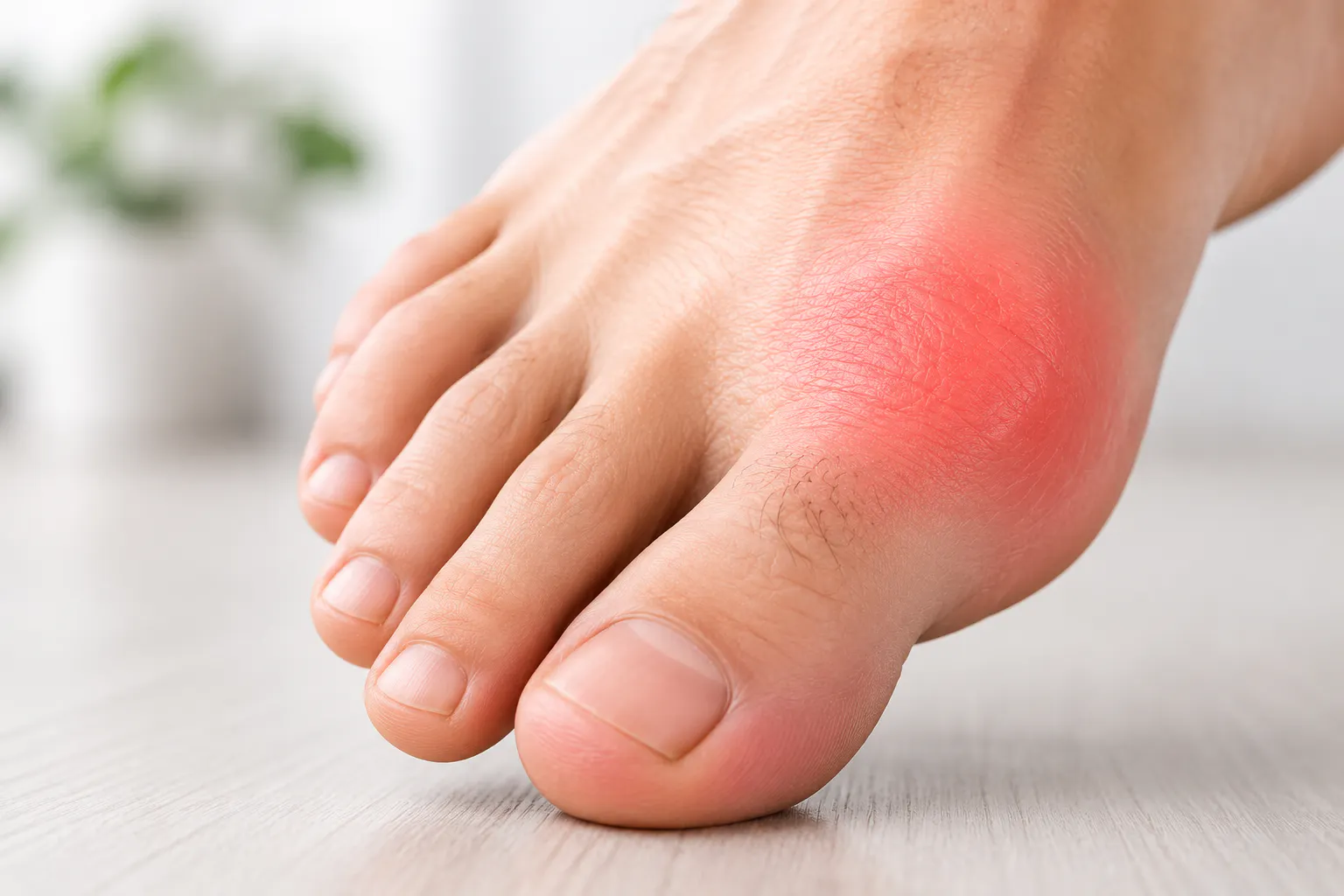
Gout
Overview
Gout is a form of inflammatory arthritis that can cause sudden, severe pain, redness and swelling, often in the big toe joint.
Condition Information
What is Gout?
Gout is a form of arthritis that causes sudden inflammation in a joint.
It occurs when urate, also known as uric acid, builds up in the body and forms crystals inside a joint. These crystals can trigger intense pain, swelling and redness.
The big toe is most commonly affected, although gout can also involve the feet, ankles, knees and other joints.
Common Symptoms
A gout attack often develops quickly, sometimes overnight.
Symptoms may include:
- sudden, severe joint pain
- redness and warmth around the joint
- swelling
- tenderness, sometimes making even light touch uncomfortable
- reduced movement in the affected joint
- difficulty walking when the foot or ankle is affected
Symptoms commonly affect one joint at a time.
What Causes Gout?
Gout develops when there is too much urate in the blood.
Urate is a normal waste product. Usually, the kidneys remove it from the body. If the body produces too much urate or the kidneys do not remove enough, crystals can gradually form in the joints.
Factors that can increase the risk of gout include:
- family history of gout
- kidney disease
- high blood pressure
- type 2 diabetes
- being overweight
- certain medicines, including some diuretics
- higher alcohol intake
- dehydration
- some dietary factors
Gout is not simply caused by one particular food or drink, and medical management is often needed to control urate levels and reduce future attacks.
How is Gout Diagnosed?
Because several conditions can cause a painful, red or swollen joint, gout should be properly assessed.
Your doctor may examine the joint, review your symptoms and medical history, and organise tests where appropriate.
Testing may include a blood test for urate levels or examination of fluid taken from the affected joint. Ultrasound may sometimes also be used.
How Can a Podiatrist Help?
When gout affects the feet, a podiatrist can help manage some of the problems associated with pain, pressure and walking.
Depending on your individual situation, this may include:
- assessing the affected foot and joints
- reviewing footwear
- reducing pressure over painful areas
- providing cushioning or padding where appropriate
- assessing walking and foot function
- providing advice for returning to normal activity
- monitoring longer-term changes affecting the feet
- referring you to your GP or another health professional where medical treatment is required
Medication used to treat an acute gout attack or reduce urate levels needs to be managed by an appropriate medical practitioner.
Managing a Gout Attack
During an acute attack, resting and elevating the affected joint may help with discomfort.
A cold pack may also provide some relief. Your doctor can advise on appropriate medicines to reduce pain and inflammation.
Longer-term management may include medication to reduce urate levels, together with appropriate lifestyle changes.
When Should You Seek Medical Advice?
Seek medical assessment if a joint suddenly becomes severely painful, swollen, red or stiff, particularly if you have not previously been diagnosed with gout.
You should also seek prompt medical attention if you have a fever, feel generally unwell, or the symptoms are severe, because infection can sometimes cause similar symptoms and requires urgent treatment.
Protecting Your Feet
Repeated gout attacks can eventually damage affected joints.
Managing gout with your GP and maintaining appropriate foot care can help reduce the impact of the condition on walking and everyday activities.
Need help with Gout?
Our experienced podiatrists provide personalised assessment and treatment for a wide range of foot, ankle and lower limb conditions. Book an appointment today and let us help you get back on your feet.
Visit FootRight Podiatry
Find our clinic, opening hours and contact details below.